Future Forward is an Erasmus+ Cooperation Partnership in Adult Education bringing together organisations from Latvia, Poland and Norway to strengthen Futures Literacy in adult education.
The project aims to empower adult learners, particularly people living in rural and remote areas and people with migration backgrounds, by strengthening their ability to explore, question and imagine different futures. At the same time, Future Forward supports adult educators in developing the knowledge and practical skills needed to use Futures Literacy approaches in their educational work.
Through international cooperation, research, practical learning, educator training and the development and testing of educational resources, the project will explore how Futures Literacy can become a practical and accessible competence for adult learners and educators.
Project number: 2025-1-LV01-KA220-ADU-000360607
Programme: Erasmus+ KA220 – Cooperation Partnerships in Adult Education
Duration: 1 October 2025 – 30 June 2027
Coordinator: MIHI, Latvia
Partners: CASE, Poland and Fremtenkt AS, Norway
Funded by the European Union. Views and opinions expressed are however those of the author(s) only and do not necessarily reflect those of the European Union or State Education Development Agency (SEDA). Neither the European Union nor the granting authority SEDA can be held responsible for them.
Future Forward Kicks Off with a Study Visit in Bergen, Norway
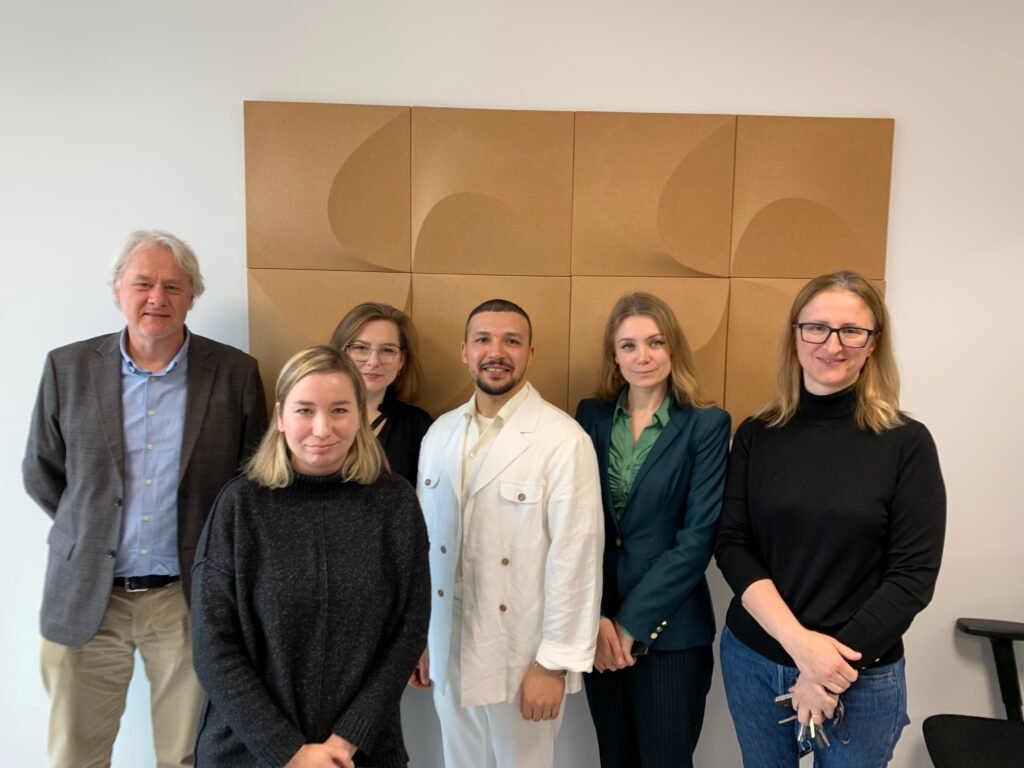
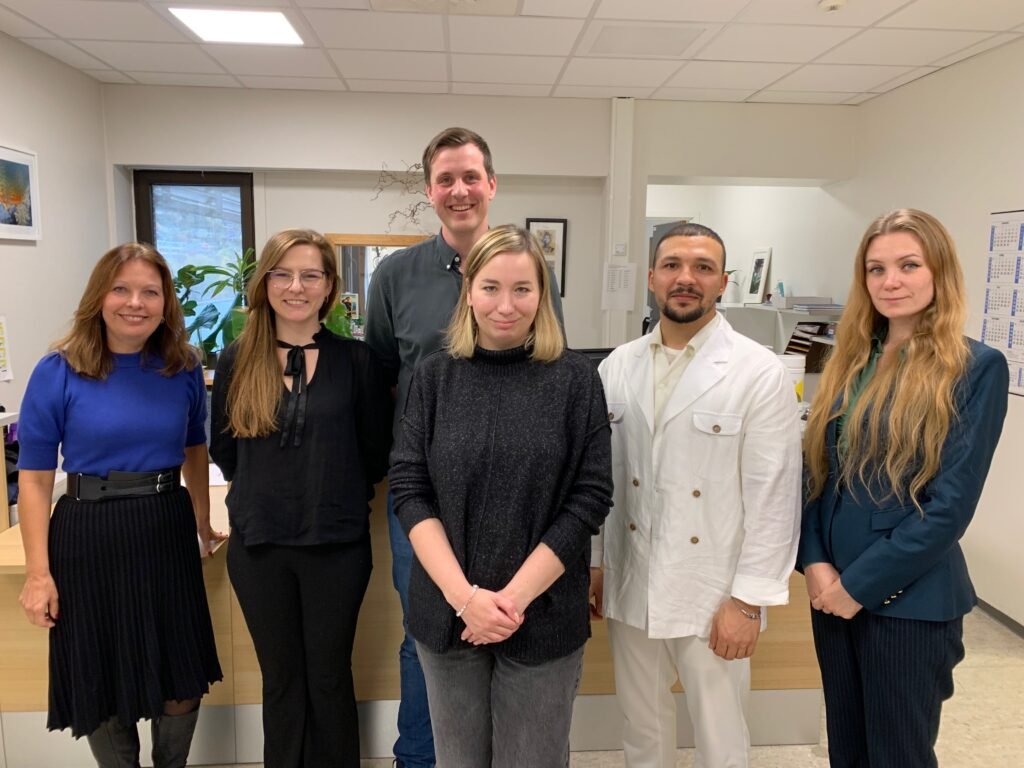
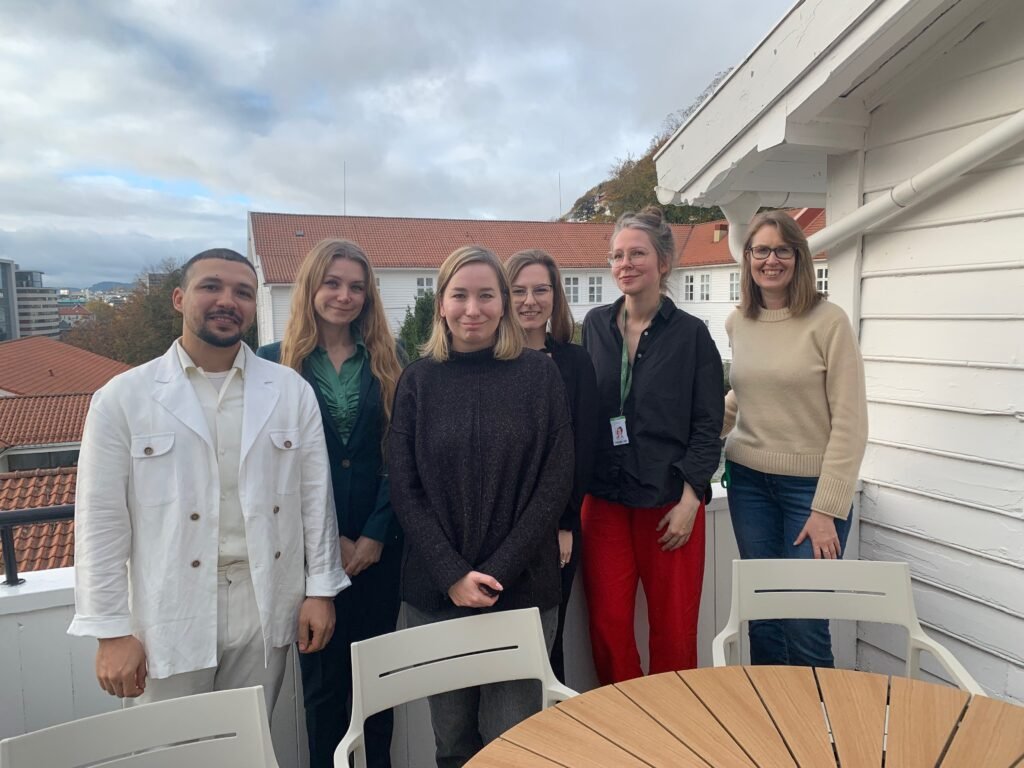
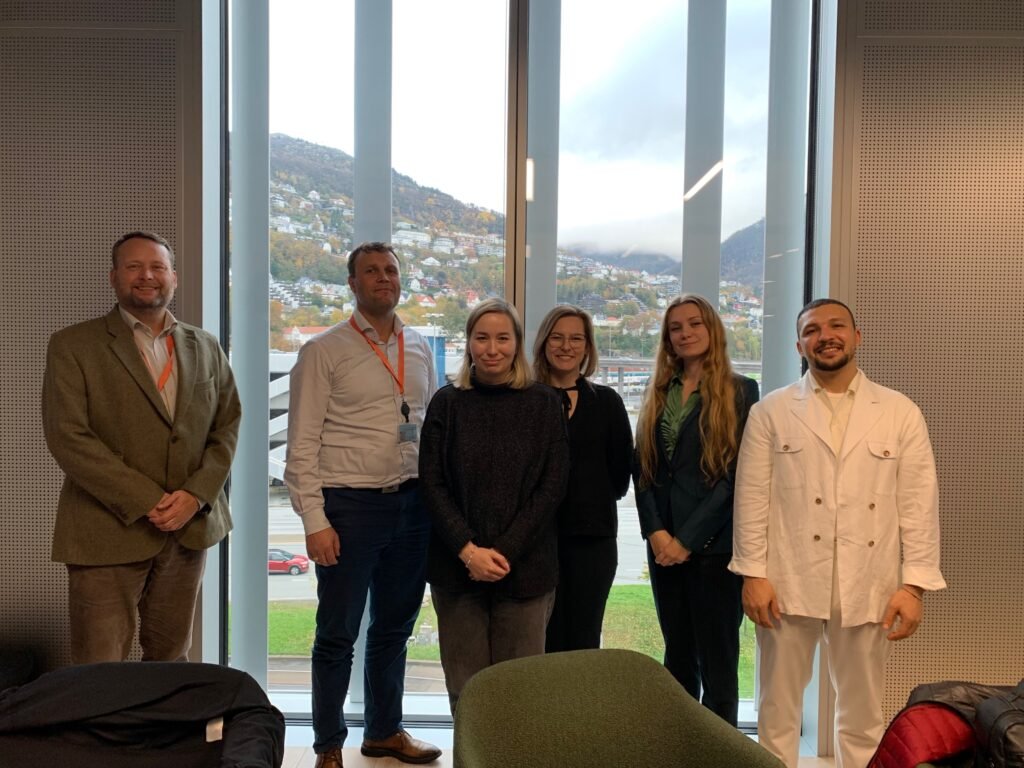
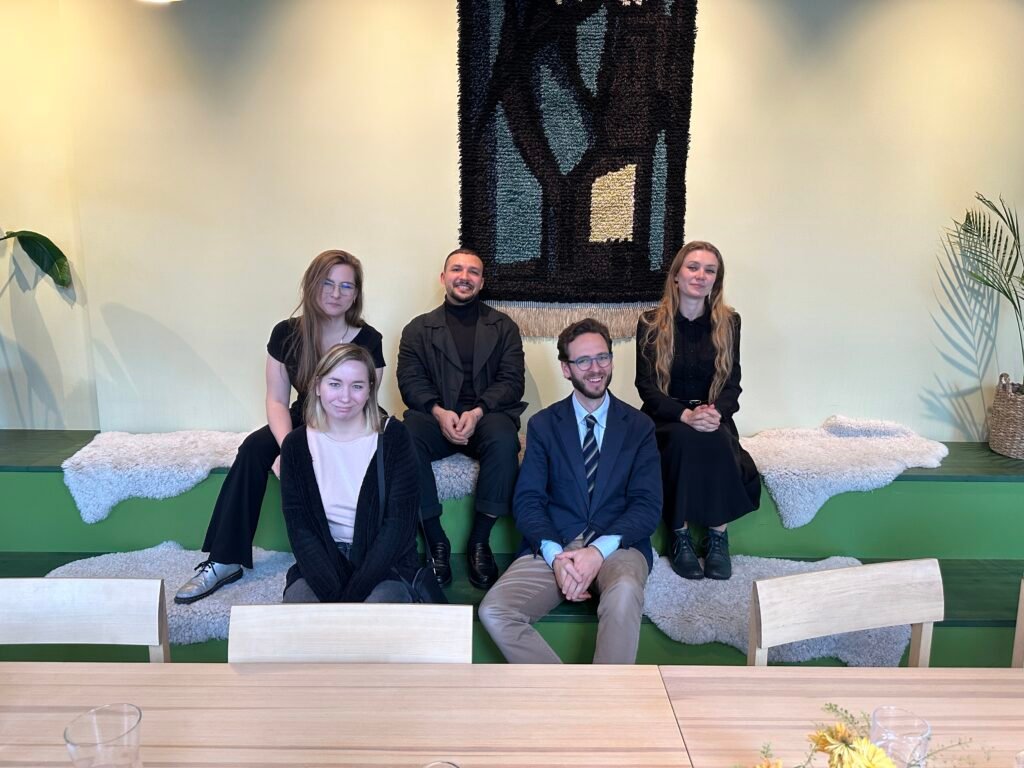
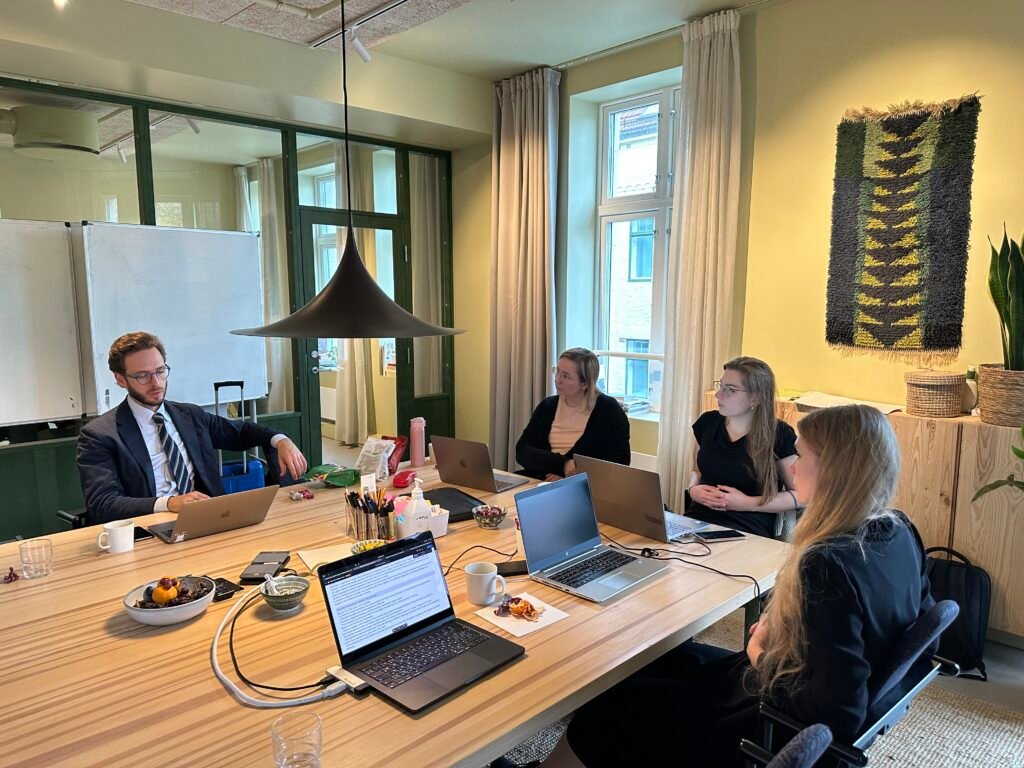
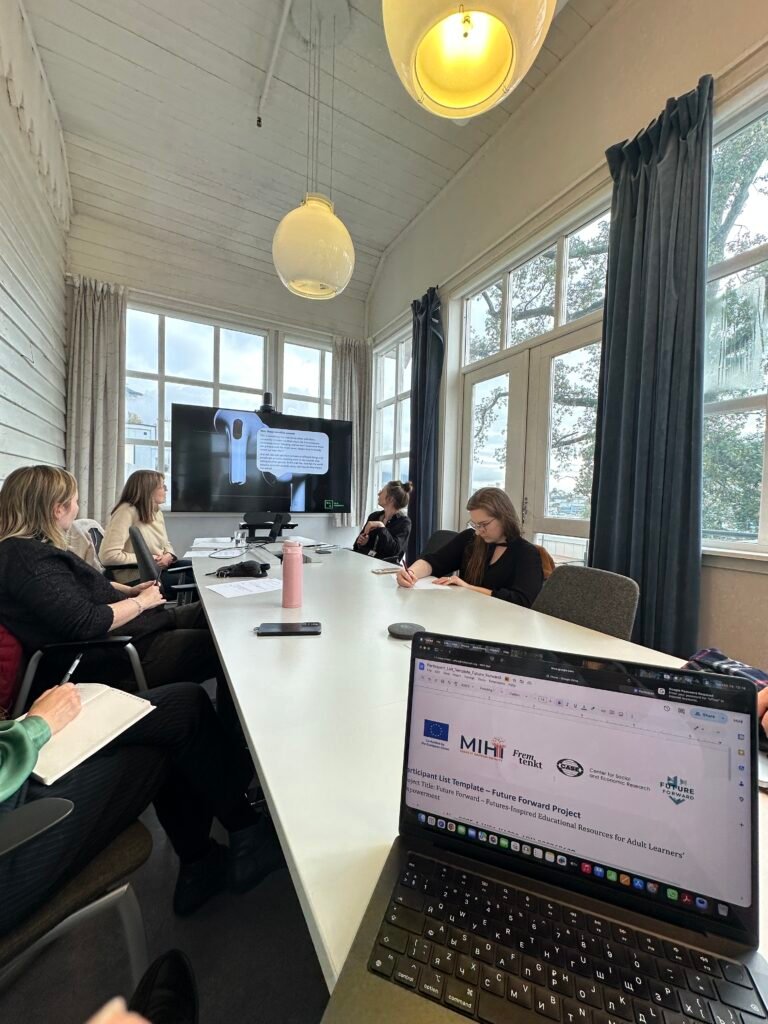
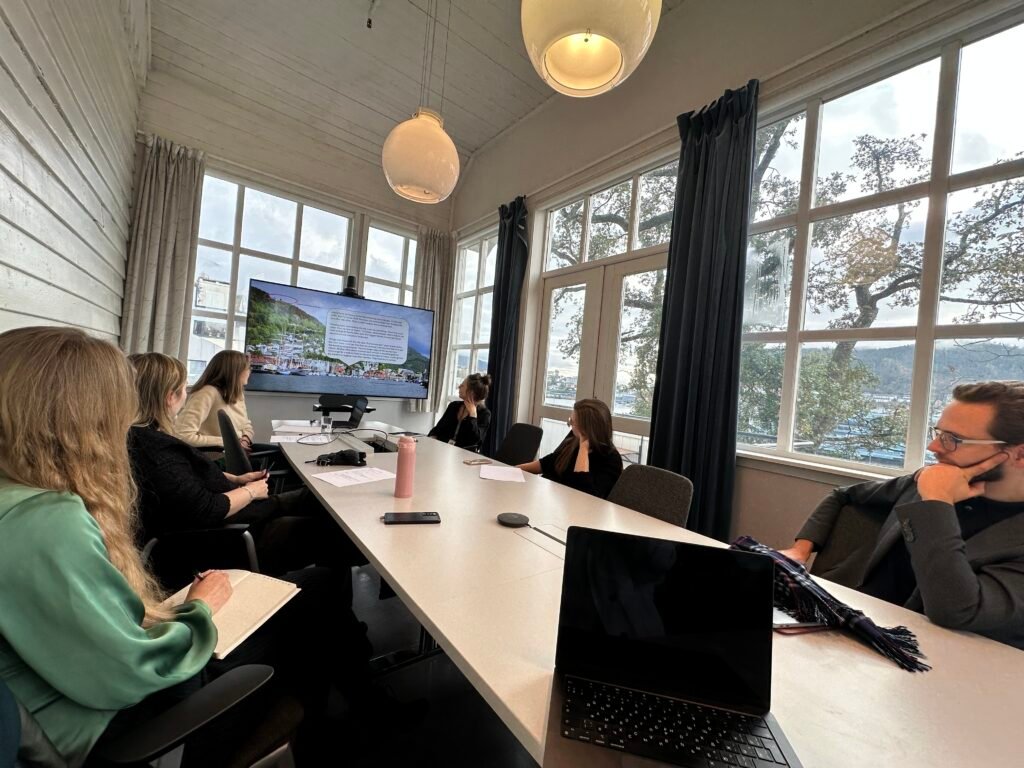
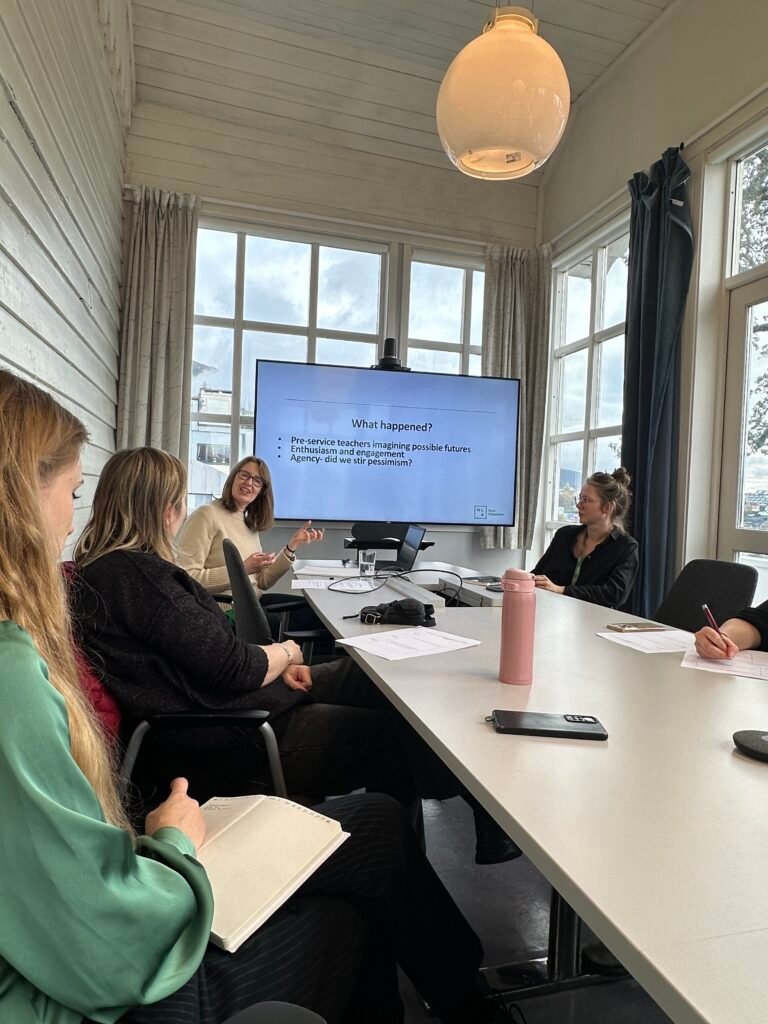
Together with our partners CASE – Center for Social and Economic Research (Poland) and Fremtenkt (Norway), MIHI officially launched the Future Forward Erasmus+ project during a kick-off meeting and study visit in Bergen, Norway.
The project, coordinated by MIHI (Latvia), is co-funded by the European Union and implemented with the support of the Latvian National Agency for Erasmus+ (VIAA).
Future Forward – Futures-Inspired Educational Resources for Adult Learners’ Empowerment aims to empower adult educators and learners through Futures Literacy – strengthening their capacity to imagine and explore different futures and use these perspectives in a changing world.
Exploring Futures Literacy in Practice
Hosted by Fremtenkt AS, the study visit marked the first major activity of the project and gave the partnership an opportunity to explore how futures methodologies are being applied across different sectors in Norway.
During the visit, the partners met with representatives of:
- Åsane kulturhus (Arna and Åsane Office of Cultural Affairs) – exploring the use of futures tools in community and cultural development.
- Fyllingsdalen Upper Secondary School – applying futures thinking within interdisciplinary sustainability projects.
- NLA University College – bringing together literature, science and social studies to encourage thinking about future challenges.
- Vestland County Council, Department of Education – exploring the use of futures methodologies in responding to complex societal and educational challenges.
From Norway to Future Forward Resources
The study visit provided the partnership with practical examples of how futures-oriented approaches can be used in education, culture and public administration.
These experiences contributed to the next stage of the project: the development of the Review on the Practical Use of Future Thinking in Different Sectors, led by CASE.
The Review brings together practical experiences from the Norway study visit with further research and examples of futures-thinking applications, helping make these approaches more accessible to educators, adult learners and other practitioners.
The insights gathered in Norway also provide a foundation for the next phases of Future Forward, including engagement with adult educators and learners in Latvia and Poland, the Train-the-Trainers programme, development of Futures Literacy scenarios, and the creation of practical educational resources.
Review on the Practical Use of Future Thinking in Different Sectors
As part of the Future Forward project, the partnership has developed a practical Review exploring how Futures Literacy and futures-thinking approaches can be applied across different sectors.
The publication builds on experiences and insights gathered during the project study visit in Norway, complemented by desk research and examples of futures-thinking practices from Norway and other European contexts.
The Review aims to make Futures Literacy more accessible to educators, adult learners, practitioners and policymakers, particularly in contexts where these approaches are still relatively new. It also considers how relevant practices and experiences can be adapted to the Latvian and Polish contexts.
Download the Review:
Developed by: CASE – Center for Social and Economic Research, with contributions and feedback from Fremtenkt and MIHI.
WP3 – Participants Recruitment and Consultations
Listening to Educators and Adult Learners
October 2025 – March 2026
Work Package 3 of the Future Forward project focused on understanding the needs, experiences and perspectives of adult educators and adult learners in Latvia and Poland. The aim was to make sure that the project’s future training activities and resources are grounded in the real experiences of the people they are designed to support.
1. Preparing the consultation tools
15 October – 13 December 2025
The project partnership first developed a common set of tools for participant recruitment, needs assessment and interviews. These included recruitment forms, needs-assessment forms, participant regulations, interview questions and guidelines.
The tools created a shared methodology for consultations in Latvia and Poland and ensured that information could be collected and analysed in a consistent way.
2. Consulting adult educators
1 December 2025 – 14 March 2026
MIHI and CASE recruited adult educators from Latvia and Poland through their networks and open calls. The planned target was 20–25 educators.
The consultations explored educators’ experiences, educational practices, needs and perspectives concerning Futures Literacy and future-oriented approaches in adult education.
By the end of the activity, 20 adult educators had been consulted/interviewed, and the collected information was analysed and synthesised.
3. Listening to adult learners
1 December 2025 – 31 March 2026
The project also focused on adult learners from groups that may experience barriers to educational opportunities, including people living in rural areas and people with migration experience.
A total of 20 adult learners were consulted — 10 from Latvia and 10 from Poland. Needs-assessment forms and in-depth interviews were used to understand their educational needs, experiences and expectations. The findings were then synthesised into the Adult Learners Needs Assessment Report.
From consultation to training
The information collected during WP3 provided an important foundation for the next stage of Future Forward.
The findings were intended to inform the development of the Train-the-Trainers programme, practical learning activities and the project’s future Guide, helping ensure that these resources respond to the actual needs identified by educators and learners.
What came next?
Following the consultation and analysis stage, the project moved into WP4 – Train the Trainers.
The training pathway began with an online introductory Futures Literacy Laboratory workshop on 18 March 2026, followed by the on-site training in Riga 26-29 May 2026. The on-site training focused on “Skills and the future of work in Europe” and introduced participants to the full Futures Literacy Laboratory cycle of Reveal, Reframe and Reflect.
This transition from listening → analysing → training is an important part of the Future Forward approach: the voices of educators and learners gathered in WP3 help shape the practical learning activities developed in WP4.
WP4 – Train the Trainers
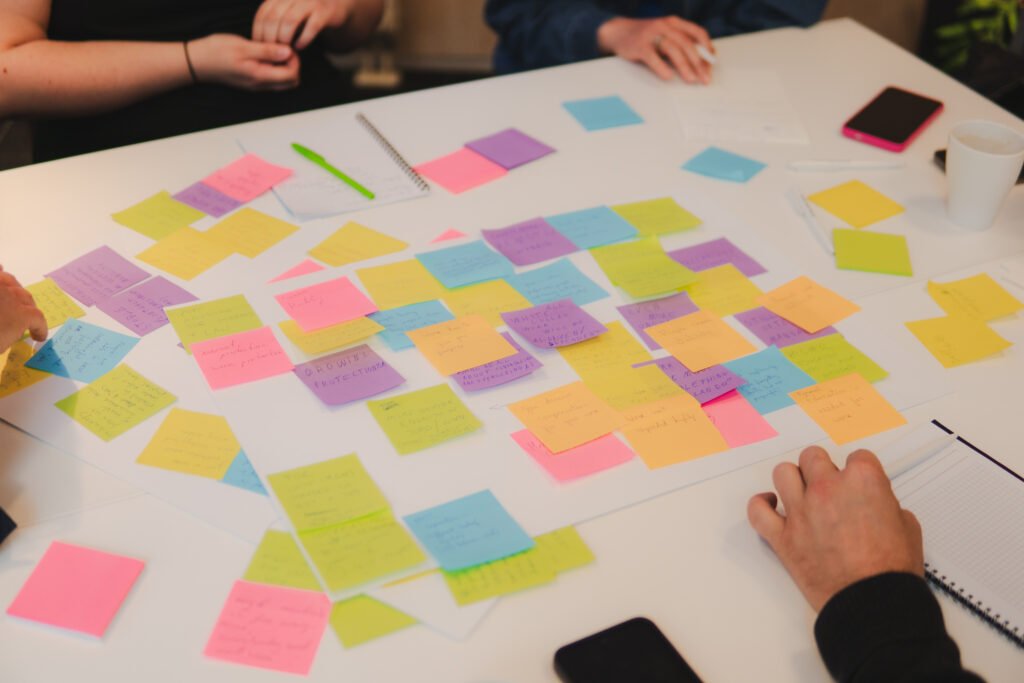
Building Futures Literacy Skills for Adult Educators
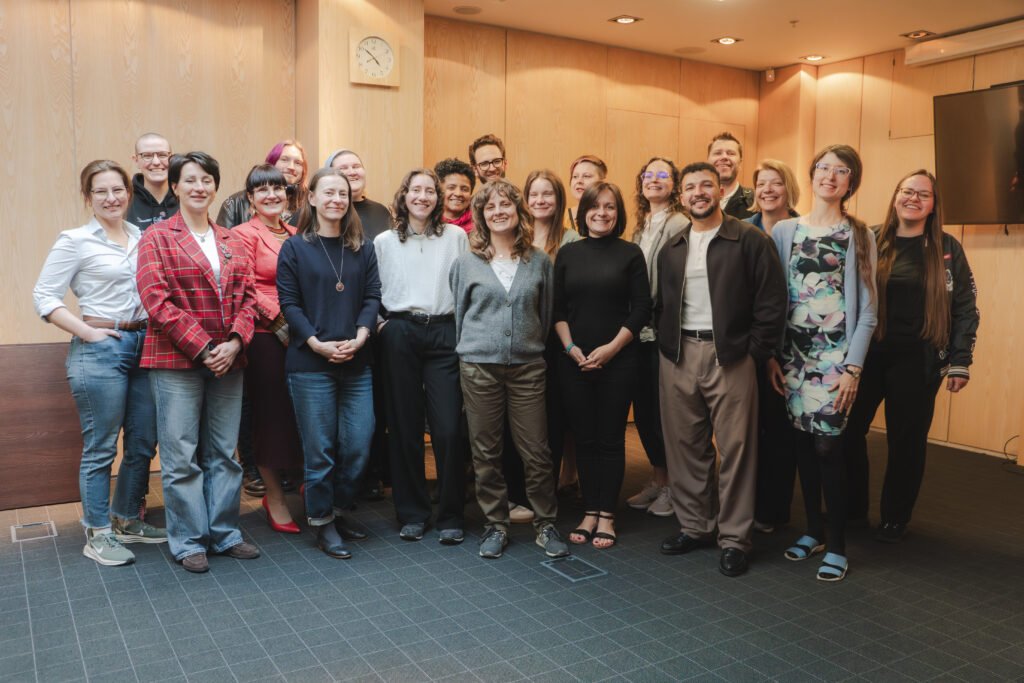
Work Package 4 focuses on equipping adult educators from Latvia and Poland with practical knowledge and experience in using the Futures Literacy Laboratory (FLL) methodology. The training combines online learning, face-to-face practice and continued scenario development, allowing participants to move from understanding the methodology to applying it themselves.
Getting started with Futures Literacy
The TTT journey began with an online introductory workshop focused on “The Future of Adult Education.”
Participants were introduced to the Futures Literacy Laboratory approach and explored how people imagine the future of adult education. Through the Reveal and initial Reframe activities, participants began examining different assumptions about possible and desirable futures.
Learning by doing – On-site training in Riga
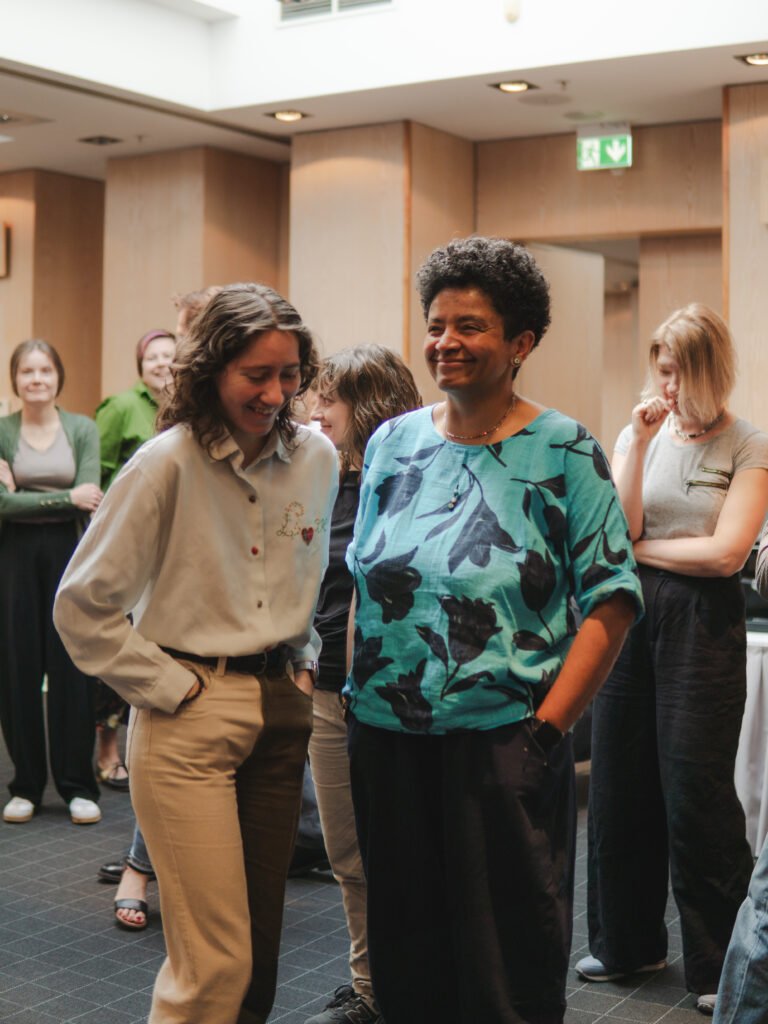
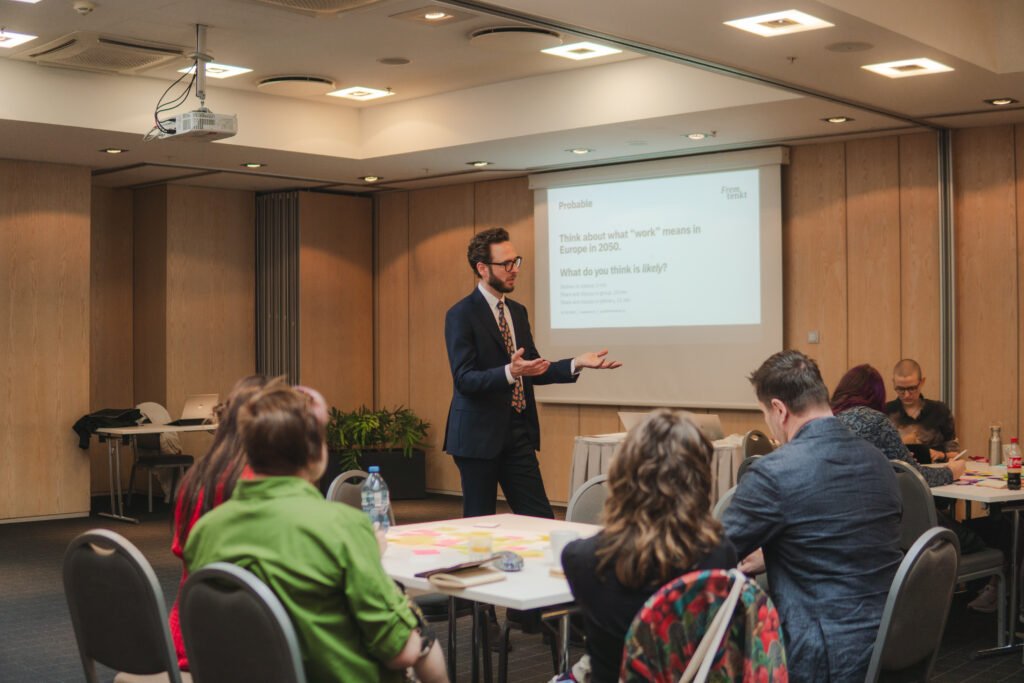
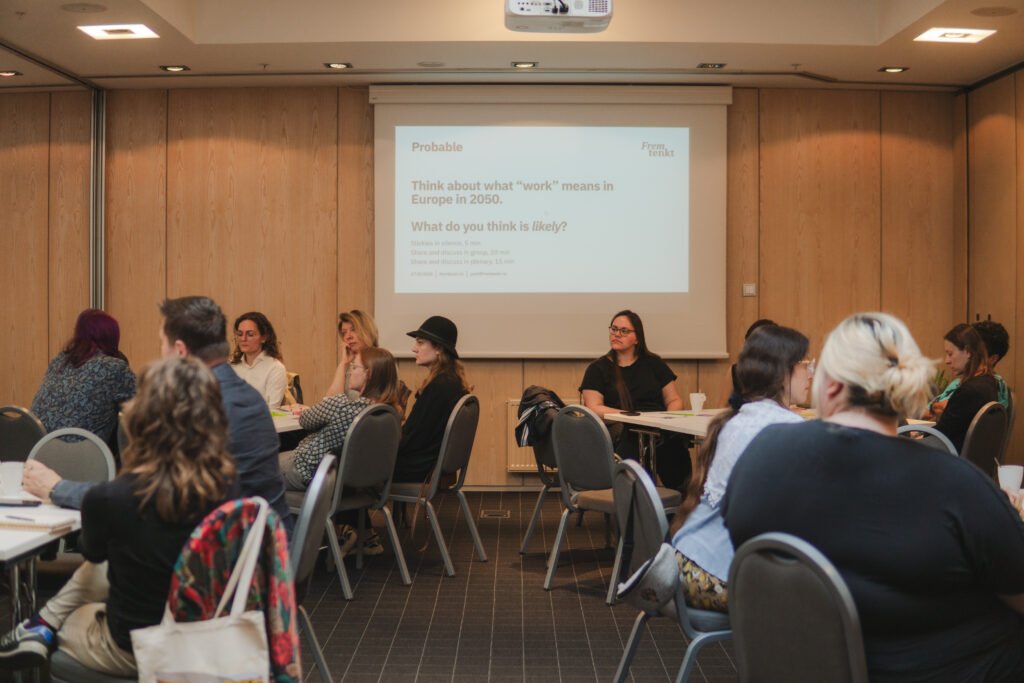
The online introduction was followed by an intensive on-site Train-the-Trainers programme in Riga, Latvia, focused on “Skills and the Future of Work in Europe.”
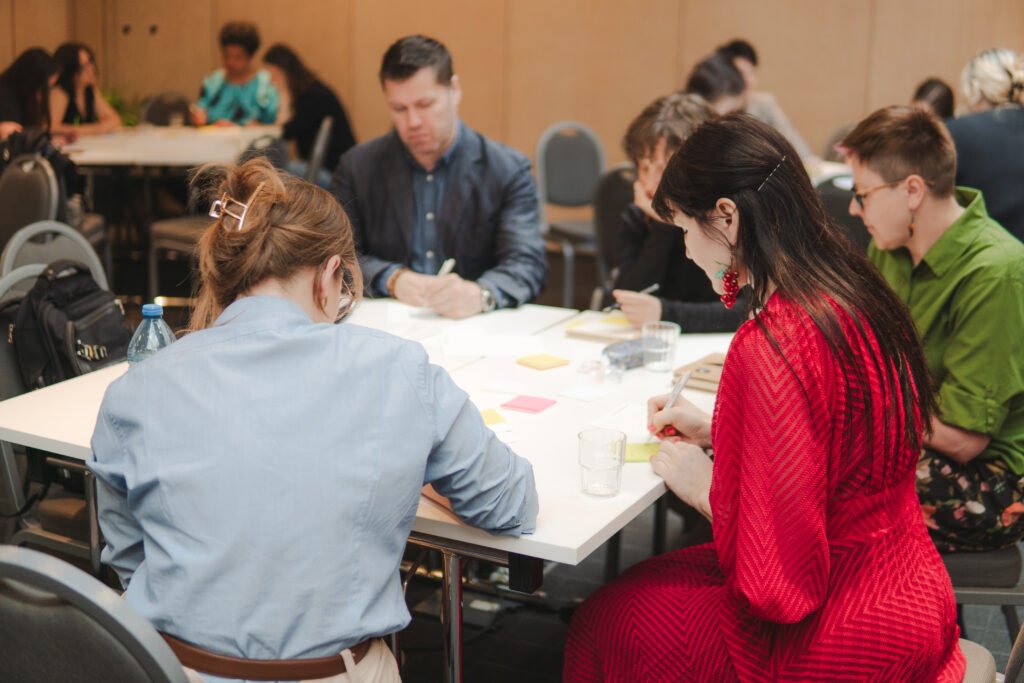
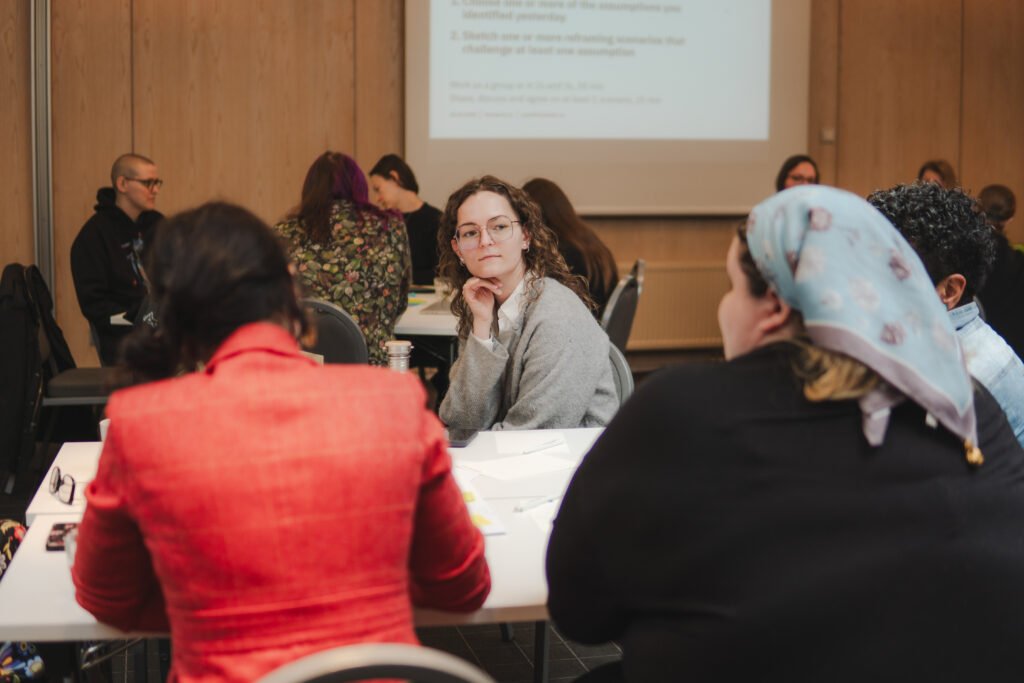
During the training, educators experienced the full Futures Literacy Laboratory cycle – Reveal, Reframe and Reflect. Working in groups, they explored assumptions about the future, developed reframing scenarios and tested the scenarios created by other groups.
The practical format allowed participants not only to learn about Futures Literacy, but to experience the methodology as participants before applying it as facilitators.
From training participants to practitioners
Following the on-site training, participants continued working independently on their own Futures Literacy plans and reframing scenarios.
Using a shared planning template and continued support from the project team, educators have been developing scenarios connected to their own areas of interest and educational practice. This follow-up stage is designed to help participants move from learning the methodology towards creating activities that they can use with adult learners.
Developing real-world scenarios
The scenario-development process has continued beyond the face-to-face training. Participants have been developing and refining individual scenarios, while follow-up support and consultations help them strengthen their ideas and prepare them for practical implementation.
The work is therefore not limited to a single training event. It represents a continuing learning process in which educators learn, experiment, create and refine their own Futures Literacy activities.
What comes next
The next stage is to bring these educator-developed approaches into learner-facing activities. The scenarios and experiences developed during the TTT process will contribute to the project’s practical learning resources and the future Future Forward Guide